Most Louisville homeowners never think about a termite inspection until they are buying or selling a home. By then, an active infestation may have already been causing damage for months or years without a single visible sign.
Termites cost U.S. homeowners an estimated five billion dollars in damage annually. Most standard homeowner insurance policies do not cover termite damage because it is classified as a preventable maintenance issue. A termite inspection in Louisville is not a formality. It is one of the more practical things a homeowner can do to protect a significant financial asset.
This guide covers exactly what a professional termite inspection involves, what inspectors look for, how long it takes, and what happens next if termites are found.
What Is a Termite Inspection and Who Needs One
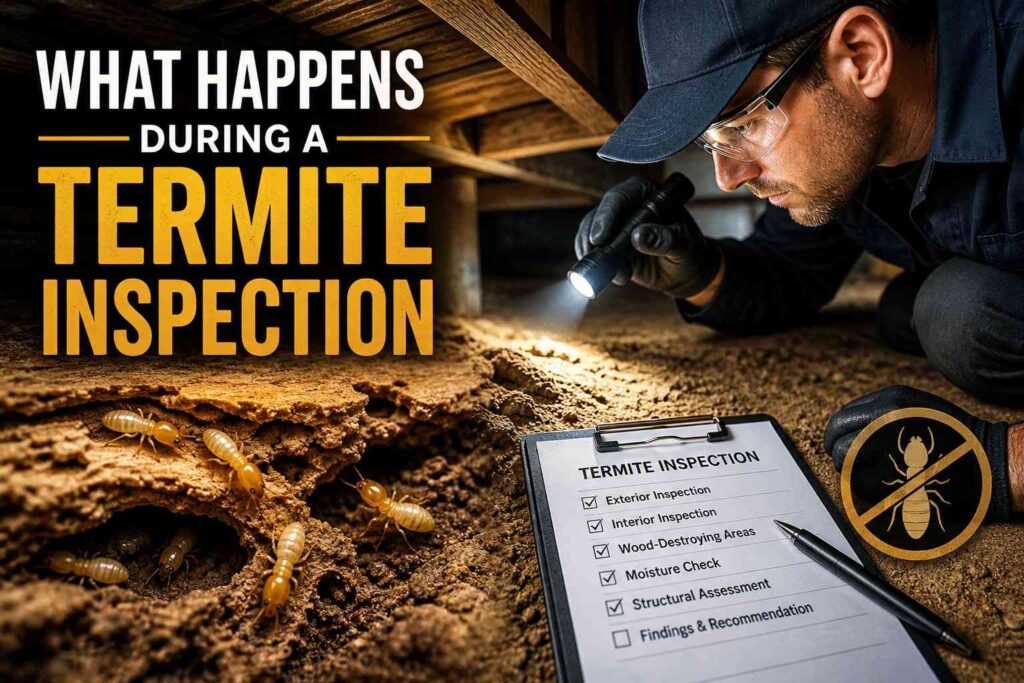
A termite inspection is a structured visual assessment of your property carried out by a licensed pest control technician. The inspector examines all accessible areas of the home for evidence of termite activity, conducive conditions, and existing damage.
Who needs one in Louisville:
Homebuyers should always request a termite inspection before closing. Sellers are not always required to disclose prior termite activity, and damage discovered after purchase becomes the buyer’s financial responsibility.
Existing homeowners benefit from annual inspections, particularly in Louisville where subterranean termites are the dominant species and active year-round in heated structures. Homes over ten years old, homes with crawl spaces, and properties near wooded areas or water carry the highest risk.
Property sellers in Kentucky are often required to provide a pest inspection report as part of the sale process. Having a current clean inspection report ready accelerates the sale and builds buyer confidence.
What Does a Termite Inspector Look For
A thorough termite inspection in Louisville covers both interior and exterior areas of the property systematically.
Outside the home, the inspector examines the foundation perimeter for mud tubes, which are the pencil-width tunnels subterranean termites build to travel between the soil and the structure. They check wood-to-soil contact points, exterior wood structures including decks and fence posts attached to the home, and areas where moisture accumulates near the foundation such as downspout discharge points and poorly graded soil.
Inside the home, inspection focuses on the basement or crawl space, garage, utility areas, and any accessible wall voids. The inspector looks for mud tubes on foundation walls, hollow-sounding or visibly damaged wood, frass which is the sawdust-like material produced by termites excavating wood, and discarded termite wings near window sills and door frames which indicate a recent swarm.
Moisture assessment is part of every professional inspection. Subterranean termites require moisture to survive. Leaking pipes, poor ventilation in crawl spaces, and damp wood near the foundation all create conditions that attract and sustain termite colonies. Identifying and addressing these conditions is part of long-term termite prevention, covered in more detail in our guide on how to spot termite damage before it becomes a serious problem.
How Long Does a Termite Inspection Take
A standard residential termite inspection in Louisville takes between 45 minutes and two hours depending on the size of the property and accessibility of key areas.
Larger homes, properties with crawl spaces, and homes with complex structures take longer than smaller single-story properties with slab foundations. The inspector needs access to all areas they are examining, so clearing space around the perimeter of the basement, crawl space access points, and attic entry is helpful before the visit.
After the inspection, the technician provides a written report detailing findings, any evidence of current or prior termite activity, conditions that increase risk, and recommended next steps. This written report is what lenders and real estate agents require for property transactions.
What Happens If Termites Are Found
Finding termite activity during an inspection does not mean your home is beyond help. It means treatment needs to begin promptly because termite colonies grow continuously and damage accumulates with every week of inactivity.
The two most common professional treatment approaches used in Louisville are liquid soil treatment and termite baiting systems.
Liquid soil treatment involves applying a termiticide barrier around and beneath the foundation. Subterranean termites passing through treated soil either die on contact or carry the product back to the colony. This method provides immediate protection and long residual effect.
Termite baiting systems use bait stations installed around the perimeter of the property. Termites feed on the bait and share it with colony members including the queen. Baiting systems work more slowly than liquid treatment but eliminate the colony at the source and are a lower-disruption option for established properties.
The right treatment method depends on the severity of the infestation, the construction type of the property, and the extent of any existing damage. Our termite control service in Louisville covers both treatment options with a full inspection to determine the most appropriate approach for your specific property.
How to Prepare for a Termite Inspection
A few simple steps help the inspector access everything they need and produce a more thorough report.
- Clear the perimeter of the home including removing stored items from against foundation walls inside the basement or garage
- Ensure crawl space access points are unblocked and accessible
- Move furniture away from exterior walls where possible in ground floor rooms
- Note any areas where you have previously noticed soft wood, staining, or unusual insect activity and mention these to the inspector at the start of the visit
- Have any previous pest inspection reports or treatment records available if the property has been treated before
Choosing the right company to carry out the inspection matters as much as the inspection itself. Our guide on choosing the right exterminator for your Louisville property covers what to look for in a licensed provider and what questions to ask before booking.
Frequently Asked Questions
1. How much does a termite inspection cost in Louisville KY?
Many Louisville pest control companies offer free termite inspections. Paid inspections for real estate transactions typically range from $75 to $150 depending on property size.
2. How often should Louisville homeowners get a termite inspection?
Annual inspections are recommended for most Louisville homes. Properties with prior termite history, crawl spaces, or significant wood-to-soil contact benefit from inspections every six months.
3. Can I do a termite inspection myself?
You can check for visible mud tubes and hollow-sounding wood, but a professional inspection covers areas homeowners cannot easily access and identifies early-stage activity before visible damage appears.
4. What is the difference between a termite inspection and a general pest inspection?
A termite inspection focuses specifically on wood-destroying organisms. A general pest inspection covers all pest types. Real estate transactions typically require a separate termite-specific report from a licensed inspector.
5. How quickly do termites cause serious damage after they are found?
Termite colonies grow slowly but continuously. A mature colony of several hundred thousand workers can cause significant structural damage over two to five years if left untreated after discovery.
6. Is termite damage covered by homeowner’s insurance in Louisville?
No. Standard homeowner’s insurance policies exclude termite damage as it is classified as a preventable maintenance issue. This makes early detection and annual inspections a financially important habit.
Buying a Louisville home, selling a property, or simply overdue for an inspection? Contact Pest Control Louisville to schedule a professional termite inspection and get a full written report on your property’s status.