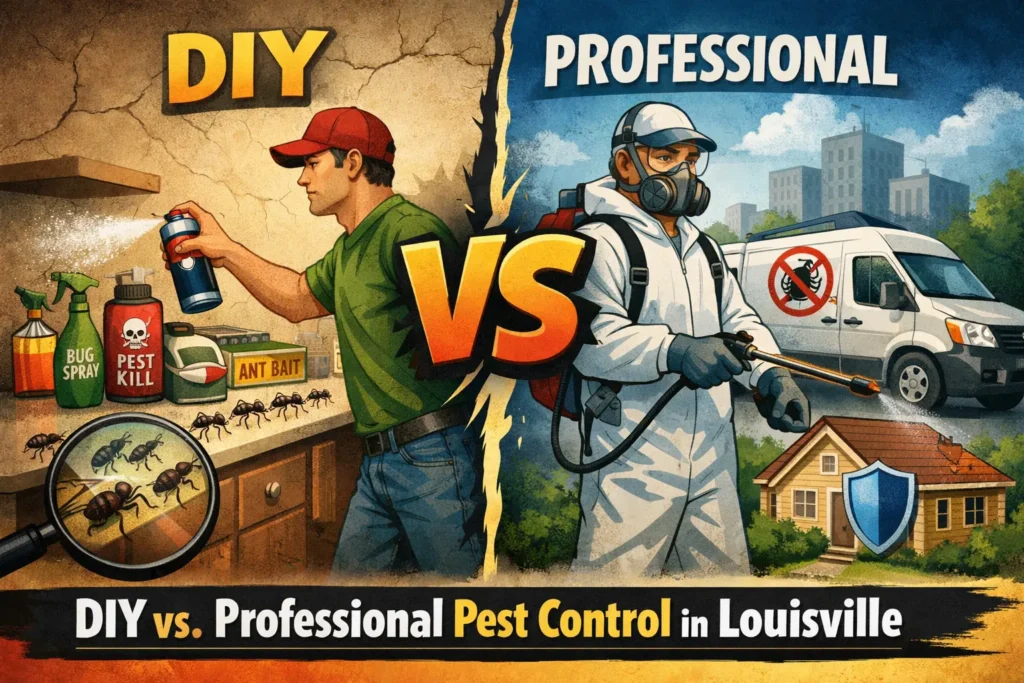
If you’ve spotted ants marching across your kitchen counter or noticed suspicious droppings behind the stove, your first instinct might be to grab something off the hardware store shelf. It’s cheaper, it’s immediate, and it feels like you’re doing something. But is it actually solving the problem, or just delaying a bigger one?
This guide breaks down the real differences between DIY and professional pest control in Louisville, so you can make a smarter decision for your home, your budget, and your family.
Which One Should You Choose?
DIY works for: Minor ant trails, a handful of fruit flies, the occasional spider.
Professional treatment is necessary for: Termites, bed bugs, rodents, cockroach infestations, or anything that’s been going on longer than a week or two.
That’s the honest summary. But the details matter, especially in Louisville, where humidity, aging housing stock, and seasonal pest cycles create conditions that make DIY treatments fall short more often than most people expect.
What DIY Pest Control Can (and Can’t) Do
Over-the-counter sprays, bait stations, and traps are designed to knock down pests you can see. The problem is that most infestations live where you can’t see, inside walls, under floorboards, in insulation, behind appliances.
Where DIY tends to work:
- Single-room ant trails with a visible entry point
- Fruit flies or gnats from a known food source
- Occasional spiders with no nesting signs
- Preventive sealing of gaps and cracks
Where DIY consistently fails:
- Bed bugs (they hide in mattress seams, outlet plates, and furniture joints, sprays rarely reach the colony)
- Termites (by the time you see the signs, the colony has been active for months, read more in our guide on how to spot termite damage early)
- Rodents (traps catch individuals, not colonies, mice can produce up to 10 litters a year)
- German cockroaches (they develop pesticide resistance quickly and hide deep in wall voids)
The core limitation of DIY is that it treats symptoms, not sources. You might kill what you see while the nest continues to grow.
What Professional Pest Control Actually Delivers
Licensed exterminators in Louisville don’t just bring stronger chemicals. They bring inspection, identification, and a treatment plan designed for the specific pest, life cycle stage, and property layout.
Here’s what that looks like in practice:
Inspection first. A professional identifies entry points, nesting areas, moisture sources, and the actual species, not just “ants” but carpenter ants vs. odorous house ants, which require completely different treatments.
Targeted treatment. Professionals use baiting systems, growth regulators, heat treatments, and exclusion work depending on what’s actually happening in your home. As we covered in our breakdown of 7 types of pest control services Louisville homeowners need, the method matters as much as the product.
Follow-up and monitoring. Most infestations need more than one visit. Professional plans include scheduled follow-ups to confirm the treatment worked and catch any reemergence early.
Guaranteed results. Reputable Louisville pest control companies stand behind their work with re-treatment guarantees, something a $12 spray can never offer you.
The Real Cost Comparison
DIY feels cheaper on the surface. A can of spray is $8. A bag of ant bait is $15. But if you’re buying product after product over three months without solving the problem, the costs add up, and the infestation often gets worse in the meantime.
Typical DIY costs:
- Hardware store sprays: $10–$30 per product
- Rodent traps: $20–$50 for a starter kit
- Ongoing cost if it doesn’t work: unlimited
Typical professional costs in Louisville:
- One-time treatment: $100–$300 depending on pest and home size
- Quarterly protection plans: $40–$80/month
- Termite treatment: $500–$2,500+ depending on severity
For most infestations beyond the very minor, professional treatment costs less in total because it works the first time.
When You Should Always Call a Professional
Some situations require a licensed exterminator, no exceptions:
- Termite damage or swarmers, structural damage means every week matters
- Bed bug confirmation, heat treatment and follow-up inspections are the only reliable method
- Rodent infestation, exclusion work is required to stop re-entry, not just trapping
- Cockroach presence in kitchen or food prep areas, health code and family safety concerns
- Recurring infestations after multiple DIY attempts, the colony is established and needs professional-grade intervention
Once you’ve decided to go professional, the next step is choosing the right company. Our guide on how to choose the right exterminator for your property in Louisville walks through exactly what to look for, licensing, treatment transparency, guarantees, and red flags to avoid.
The Smarter Middle Ground: DIY Prevention + Professional Treatment
The most effective approach isn’t choosing one over the other, it’s using DIY methods for prevention and professionals for active infestations.
Prevention you can do yourself:
- Seal gaps around pipes, windows, and door frames
- Fix moisture issues (leaky pipes, standing water near foundation)
- Store food in airtight containers
- Keep firewood, mulch, and debris away from the exterior
Treatment you should leave to professionals:
- Any confirmed infestation involving more than surface-level activity
- Pests known for rapid colony growth
- Anything involving structural areas of the home
This combination keeps costs down while ensuring that when a real problem hits, it gets resolved completely.
6 Frequently Asked Questions
1. Can I treat a bed bug infestation myself?
DIY bed bug treatment is rarely effective. Bed bugs hide in places sprays don’t reach, and over-the-counter products won’t kill eggs. Professional heat treatment is the most reliable method and usually required to clear an infestation fully.
2. How do I know if a pest problem is serious enough to call a professional?
If you’ve seen pests for more than a week, spotted damage to wood or fabric, found droppings in multiple areas, or tried DIY products without success, call a professional. Delayed treatment almost always increases the cost and severity.
3. Are professional pest control products safe for kids and pets?
Licensed exterminators in Louisville use regulated products applied at safe concentrations. Most treatments allow re-entry within a few hours. Always ask your provider what products they use and any specific precautions to take.
4. How much does professional pest control cost in Louisville compared to DIY?
DIY products typically cost $10–$50 per attempt but often need to be repeated. A professional one-time treatment runs $100–$300 and usually resolves the problem in one or two visits, making the total cost comparable, or lower, over time.
5. Does homeowner’s insurance cover pest control or damage from pests?
Most standard policies don’t cover pest damage, which is classified as a maintenance issue. This makes early professional treatment even more important, especially for termites, where repair costs can run into the thousands.
6. How often should Louisville homeowners schedule professional pest control?
For general prevention, a quarterly service plan covers the most common pests across Louisville’s pest seasons. Homes near wooded areas, near water, or with previous infestation history may benefit from monthly visits.
Conclusion
DIY pest control has its place, mostly in prevention and very minor situations. But for the pests that actually threaten your home’s structure, your family’s health, or your quality of life, professional treatment is more effective and often more affordable in the long run.
If you’re dealing with an active infestation in Louisville, don’t wait it out. The longer a colony has to establish itself, the harder and more expensive it becomes to remove.
Ready to get a professional assessment? Contact Pest Control Louisville today for a fast-response inspection and honest quote, no pressure, no guesswork.