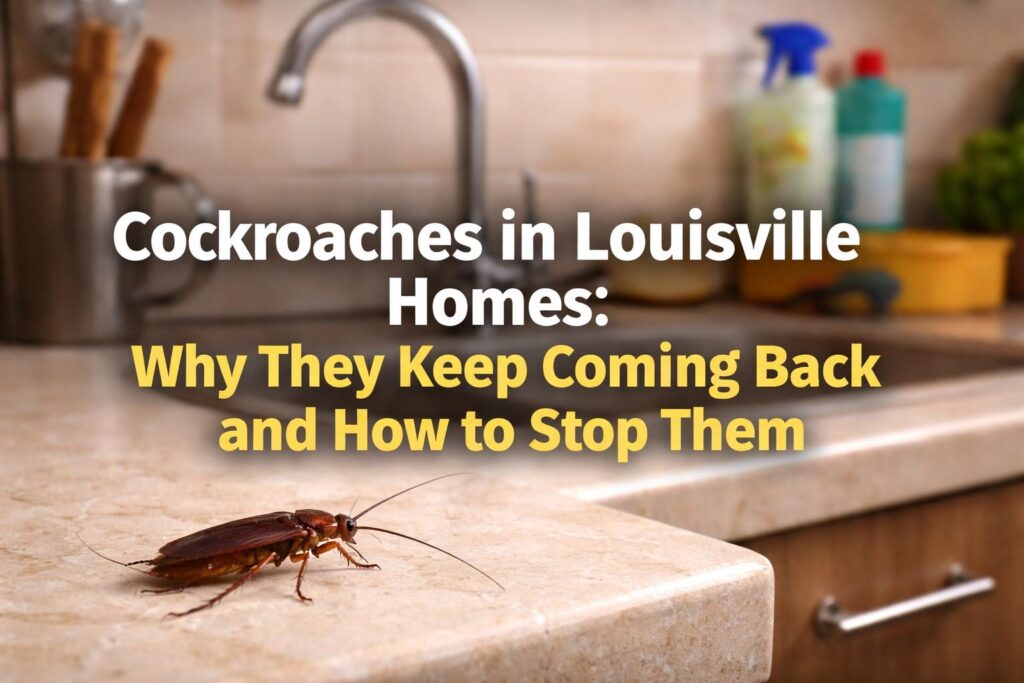
Cockroaches in Louisville Homes are one of the most frustrating pest issues for homeowners. You spray, they disappear for a week, and then they return again. If this cycle sounds familiar, you are not alone.
Cockroach infestations are common in Louisville because most treatments target the visible pests instead of the root cause. In many cases, a professional Cockroach Exterminator in Louisville KY is needed to fully eliminate the infestation and prevent them from coming back.
Why Cockroaches Are Harder to Eliminate Than Most Pests
Cockroaches are survivors in the most literal sense. They have been around for over 300 million years, and their biology reflects that. Understanding what makes them resilient is the first step to eliminating them properly.
They develop resistance to pesticides. The German cockroach, which is the species most commonly found inside Louisville homes, kitchens, and apartments, adapts quickly to chemical exposure. Populations that survive a spray treatment pass that resistance to their offspring within just a few generations. This is why the same product that worked six months ago stops working. You are not imagining it.
They hide where sprays do not reach. Roaches spend roughly 75 percent of their time in harborage areas, which are tight, dark, warm spaces inside wall voids, behind refrigerators, under stoves, inside cabinet hinges, and around plumbing penetrations. A surface spray kills the roaches that walk through treated areas. It does not reach the colony.
They reproduce rapidly. A single female German cockroach produces an egg case containing up to 40 eggs every few weeks. One surviving pair after an incomplete treatment can rebuild a full infestation within two to three months. This is why partial elimination consistently leads to the same problem returning on a predictable cycle.
Why Louisville Homes See High Cockroach Activity
Louisville’s climate plays a major role in high cockroach activity. Hot, humid summers create ideal breeding conditions, while older housing provides cracks and moisture where roaches thrive. German cockroaches are most common indoors, especially in kitchens and bathrooms where even small water sources like leaks or condensation can support colonies.
American cockroaches usually enter from outside through drains, foundations, and gaps, often found in basements and crawl spaces. In multi-unit buildings, infestations spread easily through shared walls and plumbing, making coordinated professional treatment essential for effective control.
What Over-the-Counter Treatment Gets Wrong
Most homeowners start with spray cans, but they often fail for specific reasons. Spray products are mainly repellents, so roaches avoid treated areas and move deeper into walls or spread to other rooms instead of dying off. Foggers or bug bombs are also ineffective because they cannot reach hidden nesting sites where cockroaches actually live.
Studies show they have little impact on established German cockroach infestations and can leave chemical residue on surfaces. For a deeper understanding of why DIY methods fail, see our breakdown of what DIY pest control can and cannot do.
What Professional Cockroach Control Actually Involves
A licensed cockroach exterminator does not just apply a stronger version of what you find at the hardware store. The approach is fundamentally different.
Inspection and species identification. Treatment strategy depends entirely on which species is present. German cockroach control relies heavily on gel baiting in harborage areas. American cockroach control focuses more on exclusion and perimeter treatment. Misidentifying the species leads to ineffective treatment.
Gel bait application. Professional-grade gel baits are placed directly inside cabinet hinges, behind appliances, under sinks, and in other harborage sites. Roaches feed on the bait, return to the colony, and spread the active ingredient through contact and cannibalism, which is a natural behavior that works in favor of the treatment. This is how you reach the colony without spraying surfaces.
Insect growth regulators. These products interrupt the cockroach reproductive cycle by preventing nymphs from developing into breeding adults. They do not kill roaches on contact but are essential for preventing population rebound after the initial treatment.
Follow-up visits. A single cockroach treatment is rarely sufficient for an established infestation. Professional plans include scheduled follow-up visits to reapply bait, assess activity levels, and adjust the treatment if needed.
Many homeowners only call a professional after weeks or months of failed DIY attempts. If you have spotted roaches in multiple rooms, found egg cases, or noticed activity during daylight hours, the infestation is well established. Our guide on the hidden pest signs that indicate a serious problem explains exactly what to look for before an infestation reaches that stage.
What You Can Do Between Professional Treatments
Cockroach control is most effective when treatment and sanitation work together. These steps reduce harborage and food availability significantly:
- Fix any dripping pipes or plumbing leaks immediately since moisture is the primary attractant for German cockroaches
- Clean behind and underneath appliances regularly, including the refrigerator motor area which generates heat and collects grease
- Store food including pet food in sealed hard-sided containers rather than open bags or cardboard boxes
- Empty kitchen bins daily and keep bin lids closed
- Seal gaps around pipes, under sinks, and around any utility penetrations with caulk
- Avoid leaving dishes in the sink overnight since even small food residue sustains a colony
These measures alone will not eliminate an active infestation, but they make your home significantly less habitable for cockroaches and allow professional treatments to work more effectively.
Understanding which cockroach treatment method suits your situation is part of choosing the right provider. The full range of professional pest control approaches available in Louisville is covered in our guide to the types of pest control services Louisville homeowners need.
Frequently Asked Questions
1. Why do cockroaches keep coming back after I spray?
Sprays repel roaches into hiding rather than eliminating the colony. Surviving roaches rebuild the population within weeks. Professional gel baiting reaches harborage areas that sprays cannot penetrate.
2. What is the most common cockroach in Louisville homes?
The German cockroach is the most common indoor species in Louisville. It is small, fast-reproducing, and develops pesticide resistance quickly, making professional treatment far more reliable than store-bought products.
3. Are cockroaches dangerous to my family’s health?
Yes. Cockroaches spread bacteria including Salmonella, trigger asthma and allergy symptoms especially in children, and contaminate food preparation surfaces. An active infestation is a genuine health concern, not just a nuisance.
4. How long does professional cockroach treatment take to work?
Most homeowners see a significant reduction in cockroach activity within 1 to 2 weeks of professional gel bait treatment. Full elimination of a heavy infestation typically requires 2 to 3 treatment visits over 4 to 6 weeks.
5. Can cockroaches spread between apartments in my building?
Yes. Cockroaches travel freely through shared wall voids, plumbing chases, and under doors. Treating one unit without coordinating treatment across neighboring units often results in rapid re-infestation.
6. How much does cockroach exterminator service cost in Louisville KY?
A professional cockroach treatment in Louisville typically ranges from $150 to $350 depending on infestation severity and property size. Follow-up visits are usually included in professional treatment plans.
Cockroaches in your kitchen or bathroom that keep returning after treatment? Contact Pest Control Louisville for a professional inspection and a treatment plan that targets the colony, not just the surface.