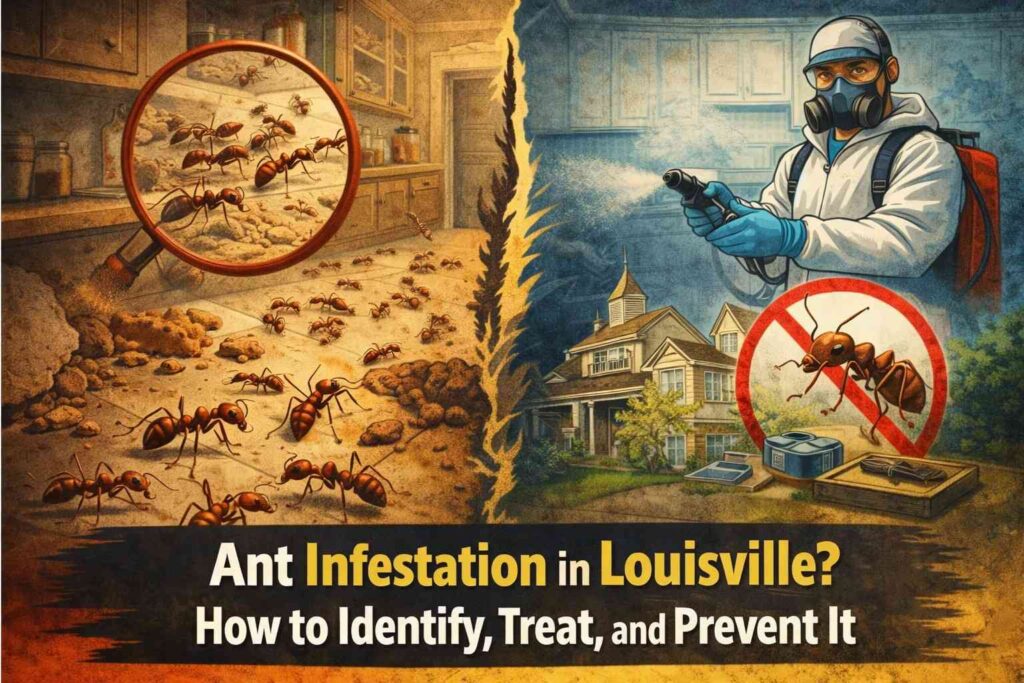
Ant infestation in Louisville is one of the most common pest complaints homeowners face. Most people notice a trail across the kitchen counter and assume a quick spray will sort it. Sometimes it does. But if ants keep reappearing in the same spots, or show up in new areas, that spray is not fixing the problem. It is making it harder to fix.
The reason ant control fails so often comes down to one thing: people treat the workers and ignore the colony.
Ant Species Common in Louisville Homes
Not all ants are the same, and treating the wrong species with the wrong method wastes time and money. Louisville homeowners most commonly deal with three species.
Odorous House Ants: Small, dark brown to black ants drawn to sweet foods and moisture. Colonies contain multiple queens, making complete elimination much harder than most homeowners expect.
Pavement Ants: Build nests under driveways and foundations, entering through cracks in search of food. They establish persistent foraging trails that last months without proper colony treatment.
Carpenter Ants: Large black ants that excavate wood to nest inside it. Finding them indoors during winter strongly suggests an established colony causing structural damage.
Why Ant Treatments Fail
The answer is almost always the same: the treatment targeted workers, not the queen.
Worker ants are the ones you see. Killing them with a surface spray provides temporary relief, but the queen continues laying hundreds of eggs daily. The colony rebounds within days. Spray products also trigger budding in odorous house ants, splitting one colony into multiple satellite colonies across your home. If you have faced the same cycle with other pests, why cockroach infestations keep coming back despite repeated spraying explains the same biology at work.
What Actually Works for Ant Control in Louisville
Professional ant control in Louisville consistently outperforms DIY because the right method depends entirely on the species present. Here is what works.
Slow-acting bait is the most effective tool for eliminating ant colonies:. Workers carry bait back to the nest, feeding it to the queen. When the queen dies, the entire colony collapses permanently.
Baiting works best when competing food sources are removed: Foraging ants ignore bait when easier food is available. Removing crumbs, grease, and open containers makes bait significantly more effective.
Exterior perimeter treatment: Professional-grade residual products applied around the foundation create a lasting barrier that kills ants before they enter your home.
Carpenter ant treatment: Requires direct inspection to locate the colony inside structural wood and targeted treatment into wall voids or roof beams.
Where Ants Enter Louisville Homes
Understanding entry points helps prevent re-infestation after treatment. Ants most commonly enter through gaps around window frames, cracks in foundation walls, utility penetrations where pipes pass through exterior walls, and expansion joints in concrete near the foundation.
Louisville homes built before the 1970s see higher ant pressure than newer construction. Deteriorated caulking, settling foundation cracks, and unsealed utility penetrations are common in older properties. The broader prevention strategies that apply across pest types are covered in our guide on how to stop pests from coming back after treatment, worth reading alongside this one.
Preventing Ant Infestations in Your Home
Once an ant problem has been treated, these steps reduce the likelihood of it returning:
- Wipe down kitchen counters, stovetop, and appliance exteriors daily to remove food residue and grease that attracts foraging ants
- Store sugar, honey, syrups, and cereal in sealed glass or hard plastic containers since cardboard and thin plastic are not barriers
- Fix any leaking pipes under sinks or around appliances immediately as moisture is a primary attractant for odorous house ants
- Seal gaps around window frames, door sweeps, and where pipes enter walls using silicone caulk
- Keep tree branches and shrubs trimmed back from the exterior walls since ants use these as bridges into the home
- Avoid leaving pet food out overnight as open bowls are a reliable food source that draws ants indoors
The prevention habits that work for ants overlap significantly with what keeps other common household pests out. If you are dealing with multiple pest types, the approach we outlined for keeping mice and rats from re-entering your Louisville home covers the exclusion and sanitation principles that apply equally here.
Frequently Asked Questions
1. What is the fastest way to get rid of ants in my Louisville home?
Slow-acting bait is the most effective method because it eliminates the queen and collapses the colony. Sprays kill workers on contact but leave the colony intact, meaning ants return within days.
2. Why do ants keep coming back after I spray them?
Sprays kill foraging workers but do not reach the colony or queen. Some species also split into satellite colonies when they detect repellent chemicals, spreading the infestation rather than reducing it.
3. Are carpenter ants dangerous to my home’s structure?
Yes. Carpenter ants excavate wood to build nesting galleries, causing structural damage over time. Finding them indoors during winter strongly suggests an established colony inside the structure requiring professional treatment.
4. How do I know which ant species I have in my home?
Size, color, and behavior are the key indicators. Small dark ants near food sources are typically odorous house ants. Large black ants near wooden structures suggest carpenter ants. A professional inspection confirms the species and guides the right treatment.
5. How long does professional ant treatment take to work?
Gel bait treatments typically reduce visible ant activity within one to two weeks as workers carry the bait back to the colony. Full colony elimination for heavy infestations may take three to four weeks with follow-up visits.
6. How much does ant control cost in Louisville KY?
A professional ant treatment in Louisville generally ranges from $120 to $280 depending on the species, infestation size, and property. Carpenter ant treatment may cost more due to the inspection and targeted application required.
Seeing ant trails that keep coming back no matter what you try? Contact Pest Control Louisville for a proper inspection, species identification, and a treatment plan that targets the colony from the inside out.