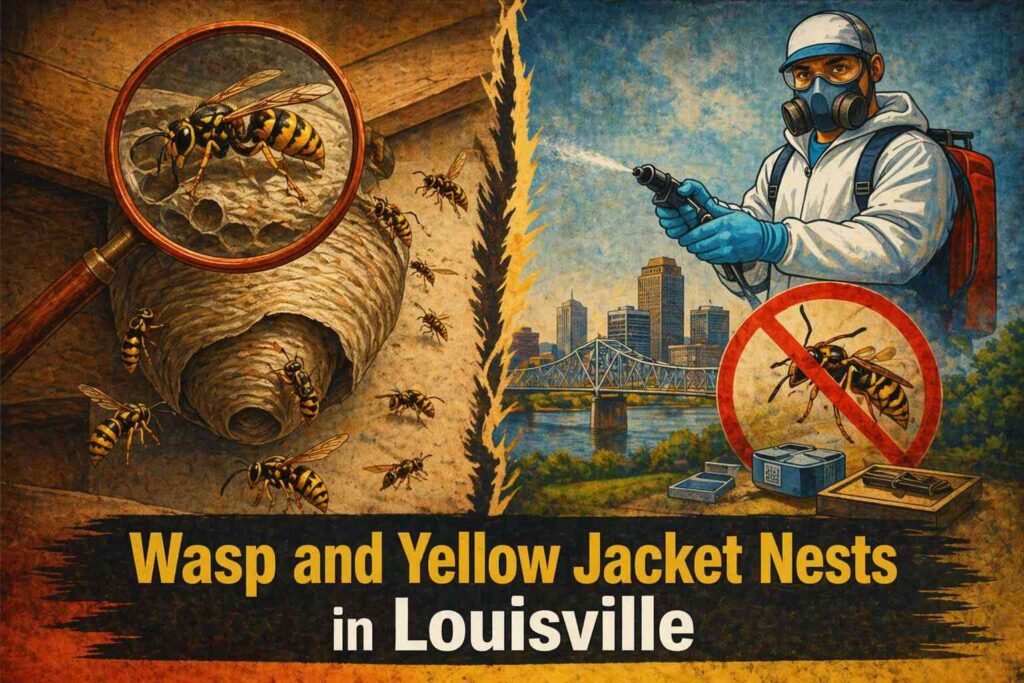
A wasp nest on your property in spring may seem manageable, but by August it can hold thousands of aggressive stinging insects. Wasps and Yellow Jacket Nests in Louisville are often mishandled—not due to complexity, but because mistakes lead to immediate and painful consequences.
This guide explains how to identify these pests, understand the risks, what DIY methods can safely handle, and when professional removal becomes the smartest and safest option.
Wasps and Yellow Jackets in Louisville: Know What You Are Dealing With
Louisville homeowners encounter several stinging insect species during the warmer months. Telling them apart matters because their nesting habits, aggression levels, and the right removal approach differ significantly.
Yellow Jackets
Yellow jackets cause most stings in Louisville. Small and yellow-black, they’re often mistaken for bees but are far more aggressive, capable of stinging repeatedly and calling others to attack. They usually nest underground or in hidden spaces, making them dangerous since nests are often discovered accidentally.
Paper Wasps
Paper wasps build open, umbrella-shaped nests under eaves, railings, and garage frames. Their grey, papery nests are easy to spot. They are less aggressive than yellow jackets and typically sting only when threatened. If the nest is undisturbed and away from traffic, removal may not be urgent.
Bald-Faced Hornets
Bald-faced hornets build large, enclosed grey nests in trees or on buildings. Larger and more aggressive than other species, they fiercely defend their colonies. By late summer, nests can hold hundreds. Due to high risk of multiple stings, professional removal is strongly recommended in Louisville.
Mud Daubers
Mud daubers are solitary wasps that rarely sting and are generally harmless. They build small mud tube nests on walls or ceilings and prey on spiders. Unlike other wasps, they are beneficial and not aggressive. Simple removal and sealing entry points is usually enough to manage them.
When Yellow Jacket and Wasp Season Peaks in Louisville
Stinging insect colonies in Louisville follow a predictable cycle that affects how risky removal can be. Nests begin forming in early spring with few workers and grow steadily through May and June. Peak activity occurs from July to September, when colonies are largest and most aggressive. By October, colonies decline as temperatures drop, leaving only queens to survive winter.
Nests are not reused but may reappear in similar spots. Understanding this cycle helps with proper timing, as explained in how seasonal pests follow predictable patterns in Louisville, making early action safer and more effective.
What DIY Wasp Removal Can and Cannot Handle
There is a narrow window where DIY wasp removal is reasonable. Outside of that window, the risk of a serious stinging incident outweighs any cost savings.
Reasonable DIY situations:
Small paper wasp nests (golf ball size) in accessible, low-traffic areas can be handled early in the season. Treat at dusk or dawn when activity is minimal.
Use wasp sprays from a safe distance, wear protective gear, and ensure a clear exit route before starting.
Situations that require professional pest control services in Louisville:
Underground nests, wall void infestations, large nests, or those near high-traffic areas require professionals. Allergy risks and bald-faced hornets increase danger.
DIY sprays often fail in such cases. As explained in what DIY pest control genuinely cannot handle, these situations need expert treatment to avoid serious harm.
What Professional Wasp Removal in Louisville Involves
A licensed exterminator approaching a wasp or yellow jacket problem follows a structured process that prioritizes complete colony elimination rather than surface knockdown.
Inspection and nest location. For underground yellow jacket nests and in-wall nests, locating the full extent of the colony before treatment begins is essential. A professional inspection identifies entry points, nest size, and colony access points that determine the treatment approach.
Targeted insecticide application. Professional-grade products applied directly into the nest opening eliminate the colony at the source. For aerial nests, treatment is applied in the evening when activity is lowest. For underground or in-wall nests, dust formulations injected directly into the void reach areas that aerosol sprays cannot penetrate.
Entry point sealing. For in-wall nests, sealing the entry point after treatment prevents new colonies from establishing in the same void the following season. This step is frequently skipped in DIY removal and is one of the main reasons the same location sees repeated wasp problems year after year.
Follow-up confirmation. A professional wasp exterminator confirms colony elimination at a follow-up visit, particularly for larger nests where a single treatment may not reach the entire colony.
Managing stinging insects is part of broader outdoor pest control across Louisville’s warmer months. If mosquitoes are also a problem on your property, our seasonal guide on mosquito control in Louisville KY covers the same outdoor pest season with treatment approaches that pair well with wasp management.
Reducing Wasp and Yellow Jacket Activity Around Your Property
These steps reduce the conditions that attract nesting stinging insects to your property each season:
- Inspect eaves, fence lines, garage frames, and deck undersides in early spring before colonies establish, since small nests treated early require far less effort than mature ones
- Keep outdoor bins sealed and away from the home since exposed food and sugary drinks attract foraging yellow jackets from considerable distances
- Fill ground holes and gaps in retaining walls promptly as these are preferred underground nesting sites for yellow jackets
- Seal gaps around exterior electrical outlets, cable penetrations, and weep holes in brick that provide access to wall voids
- Avoid leaving uncovered sweet drinks outdoors during peak season from July through September when yellow jacket foraging is most aggressive
- Remove old or abandoned nests in autumn after the colony has died off since the paper material can attract new queens the following spring if left in place
Frequently Asked Questions
1. What is the difference between wasps and yellow jackets in Louisville?
Yellow jackets are smaller, more aggressive, and commonly nest underground or inside walls. Paper wasps build open aerial nests and are less likely to sting unless the nest is directly threatened. Both require different removal approaches.
2. Can I remove a wasp nest myself in Louisville?
Small paper wasp nests in accessible outdoor areas can be treated at dusk with aerosol spray. Underground yellow jacket nests, in-wall nests, bald-faced hornet nests, and any large colony should always be handled by a licensed professional.
3. When is yellow jacket season at its worst in Louisville KY?
Yellow jacket colonies reach peak population and peak aggression from July through September. This is when most stinging incidents occur and when DIY removal carries the highest risk of a serious outcome.
4. Why do I keep getting wasp nests in the same spot every year?
Wasps do not reuse old nests but are attracted to the same favorable conditions year after year. Sealing entry points and removing old nest material after the colony dies off in autumn significantly reduces repeat nesting in the same location.
5. Are wasp stings dangerous?
For most people, wasp and yellow jacket stings cause localised pain and swelling. For individuals with venom allergies, multiple stings can trigger anaphylaxis, which is a life-threatening emergency. Anyone with a known allergy should never attempt DIY nest removal.
6. How much does professional wasp removal cost in Louisville KY?
Professional wasp and yellow jacket removal in Louisville typically ranges from $100 to $300, depending on nest location, size, and accessibility. Underground and in-wall nests generally cost more due to the inspection and sealing work required.
Spotted a wasp or yellow jacket nest on your Louisville property? Do not wait until the colony reaches full size. Contact Pest Control Louisville for a fast-response inspection and safe, complete nest removal.