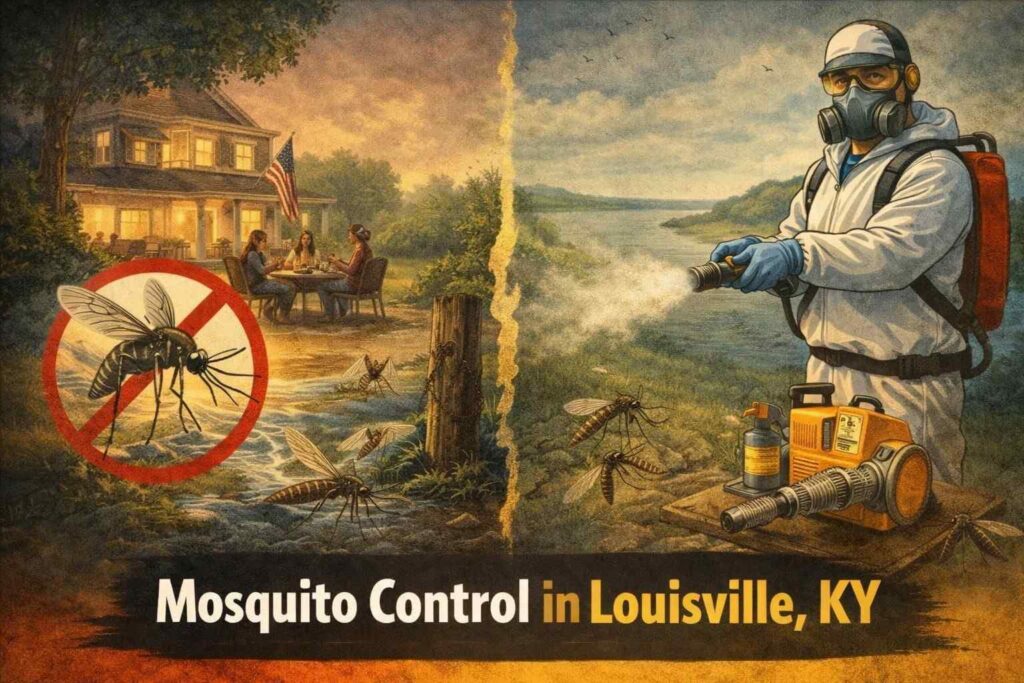
Louisville summers are something else. Outdoor dinners on the porch, evenings in the yard, weekends by the water. But from late spring through October, mosquitoes make all of that harder than it should be. And in Louisville, the conditions are almost ideal for them: high humidity, the Ohio River floodplain, slow-draining clay soils, and warm temperatures that arrive early and linger late.
If mosquitoes are keeping you out of your own yard, this guide explains what actually drives the problem, what works at each point in the season, and when professional mosquito control in Louisville makes more sense than handling it yourself.
Why Louisville Has a Serious Mosquito Problem
Mosquitoes need standing water, warmth, and a host. Louisville delivers all three. The Ohio River floodplain, clay-heavy soil that pools rainwater, and over 44 inches of annual rainfall create constant breeding opportunities. Two species dominate locally: the common house mosquito, active at dusk, and the Asian tiger mosquito, which bites during daylight and breeds in surprisingly small water sources.
Mosquito Activity in Louisville: A Season-by-Season Breakdown
Spring (March to May)
Mosquito season in Louisville starts earlier than most people plan for. As temperatures consistently reach 50 degrees Fahrenheit, overwintering eggs begin to hatch. April and May bring the first significant populations, driven by spring rainfall filling yard depressions, gutters, and any containers left outdoors over winter.
This is the most important window to act. Eliminating breeding sources in spring reduces the overall population before it establishes. A single female mosquito can lay up to 300 eggs per batch, and eggs hatch within 24 to 48 hours in warm water. Every week of inaction in April compounds into a much larger problem by June.
Summer (June to August)
Peak season runs June through August. Heat and humidity shrink the mosquito life cycle to as little as 7 to 10 days, meaning populations grow faster than most DIY measures can keep up with. Dense vegetation, shaded damp areas, and standing water all become active breeding zones.
As we covered in our guide on how seasonal pests follow predictable patterns in Louisville, summer is when proactive treatment matters most. Louisville also sits in a region where West Nile virus transmission has been documented, making this a genuine health concern.
Fall (September to October)
Mosquito activity slows but does not stop. September in Louisville often stays warm enough to sustain active populations well into the month. October sees a gradual decline, though Asian tiger mosquitoes can remain active on warm fall days until the first hard frost.
Fall is also when many homeowners ease off control measures prematurely, assuming the season is winding down. A professional residual treatment in early September extends protection through the remainder of the season without requiring additional visits.
What Actually Works: Control Methods Compared
Eliminating breeding sources is the single most effective thing any homeowner can do. Empty, scrub, and refill bird baths weekly. Clear gutters of debris that traps moisture. Store containers upside down or in covered areas. Check for low spots in the yard where water pools after rain and fill or grade them if possible. No treatment works well if active breeding sites remain.
Larvicides applied to water features that cannot be emptied, such as ornamental ponds and rain barrels, kill mosquito larvae before they develop into adults. Mosquito dunks containing Bacillus thuringiensis israelensis are widely available and safe for birds, fish, and pets. This is one area where a targeted DIY approach is genuinely effective when applied consistently.
Yard sprays and fogging knock down adult populations quickly but wear off within days to a couple of weeks. Over-the-counter spray products may reduce visible activity temporarily but rarely match the coverage or residual effect of professional-grade treatments.
Professional barrier treatments applied by a licensed mosquito exterminator target resting sites, which are the shaded vegetation, fence lines, and shrub borders where adult mosquitoes spend most of their day. A professional treatment covers these areas with a residual product that continues working for three to four weeks, providing meaningful season-long reduction when applied on a scheduled basis. Most professional mosquito control plans in Louisville involve monthly treatments from April or May through September or October.
If you have been relying on store-bought solutions that keep failing, it is worth reading through our breakdown of why DIY pest control often falls short compared to professional treatment before investing in more of the same.
Preventing Mosquitoes Around Your Property
Between professional treatments, these steps reduce mosquito pressure significantly:
- Check the yard for standing water within 48 hours after any rainfall
- Trim dense vegetation and low-hanging shrubs where mosquitoes rest during the day
- Install or repair window and door screens before spring arrives
- Use outdoor fans on patios and decks since mosquitoes are weak fliers and avoid moving air
- Consider planting basil, lavender, or citronella grass in outdoor areas as mild natural deterrents
Prevention works best as a complement to treatment, not a replacement for it. Combined with professional seasonal mosquito control, these habits make a measurable difference in how usable your outdoor spaces feel from spring through fall.
For a broader approach to keeping your property pest-free across multiple species, the prevention framework in our guide on how to stop pests from coming back applies directly to mosquito management as well.
Frequently Asked Questions
1. When does mosquito season start and end in Louisville KY?
Mosquito season in Louisville typically runs from late March through October. Peak activity is June through August, driven by heat, humidity, and frequent rainfall creating ideal breeding conditions.
2. How often should I schedule professional mosquito treatment?
Monthly treatments from April through October provide the best season-long protection. Most Louisville pest control providers offer scheduled barrier spray programs covering the full active season.
3. Can mosquitoes breed in my yard even if I don’t have a pond?
Yes. Mosquitoes breed in any standing water, including bottle caps, plant saucers, clogged gutters, and low yard spots after rain. Asian tiger mosquitoes need very little water to reproduce successfully.
4. Are professional mosquito treatments safe for children and pets?
Licensed mosquito control products in Louisville are applied at regulated concentrations. Most treatments require only a short dry time before outdoor areas are safe for children and pets to re-enter.
5. Does mosquito control also reduce the risk of West Nile virus?
Reducing adult mosquito populations through barrier treatment and breeding site elimination directly lowers exposure risk. Jefferson County health authorities have confirmed West Nile virus cases in the Louisville area.
6. How much does professional mosquito control cost in Louisville?
A single barrier treatment typically costs $75 to $150, depending on yard size. Seasonal programs with monthly applications generally range from $400 to $700 for the full active season.
Ready to take back your yard this season? Contact Pest Control Louisville for a fast-response mosquito treatment consultation and protect your outdoor spaces before peak season hits.